
Do you often feel mentally scattered or lacking motivation? Your emotions fluctuate unpredictably — energized one moment, strangely irritable the next. You may sense that something in your life is out of balance, yet struggle to identify exactly what it is. If you’ve ever wondered what the five elements are, this guide will show you.
Most people have heard of the Five Elements — Wood, Fire, Earth, Metal, and Water — yet few can explain what they actually mean. If you want to restore harmony, a great place to begin is by asking: What are the five elements, and how do they govern our lives?
This beginner’s guide is designed for those with no prior knowledge. Let’s set aside the complicated correspondences for a moment and address a fundamental question: what are the five elements?
What Are the Five Elements? Why This Framework Still Matters Today
The Five Elements have quietly influenced Chinese life for thousands of years, often in ways people do not consciously notice. I am a perfect example.
When I was born, my family consulted a traditional practitioner to choose my name according to the Five Elements. He told them that I was born with excessive Fire energy, so they included a Water-associated character in my name to balance it.
As a child, I thought the idea was ridiculous. My name sounded somewhat masculine, and people frequently questioned it, leaving me embarrassed and self-conscious. For years, I resented the decision.
Years later, I went through a period of ongoing health struggles, and a Traditional Chinese Medicine practitioner suggested that my liver energy was out of balance. In the Five Elements system, the liver is associated with Wood — and when Wood energy becomes blocked or overly intense, it is traditionally described as generating symptoms associated with Fire: irritability, restlessness, and a sense of being on edge.
The observation stayed with me.
A Turning Point
What I had once dismissed as superstition suddenly seemed to mirror my lived experience.
Looking back, the pattern became obvious. I was impatient, easily angered, and always rushing from one thing to another — classic expressions of excessive Fire energy.
So I began to wonder: how could someone have recognized this tendency when I was only a newborn? That question sparked a deeper curiosity about the Five Elements.
As I learned more, I discovered that many difficult-to-describe life experiences — feeling stuck, overwhelmed, restless, disconnected from oneself, or unable to move forward — can often be interpreted through the lens of the Five Elements. More importantly, the system offers practical ways to support balance.
The Five Elements are part of a traditional Chinese worldview refined over thousands of years. Although the system appears extensive, it is not as mysterious or inaccessible as it first seems.
This guide is written for ordinary readers. You do not need any special knowledge to begin. Approach it with curiosity, observe your own experiences, and you may find that the Five Elements have been present in your daily life all along.
Let’s start from the beginning and explore how the Five Elements can help bring greater balance to body, mind, and life.
Understanding WuXing: What Are the Five Elements?
If the words “Wood, Fire, Earth, Metal, and Water” immediately make you think of physical substances, gently let go of that idea. That is the most common misunderstanding.
The Five Elements are not five materials. They are five dynamic processes of energy and change.
Rather than static objects, think of them as five different ways energy moves through the natural world. Ancient Chinese thinkers used familiar natural phenomena to describe these patterns.
Wood — The energy of sprouting, expansion, and upward growth. Like a tree reaching toward sunlight.
Fire — The energy of rising, warming, illuminating, and radiating. Like a flame.
Earth — The energy of stability, nourishment, support, and centeredness. Like the ground beneath your feet.
Metal — The energy of refinement, structure, clarity, protection, and consolidation. Like metal crystallizing from ore.
Water — The energy of flowing downward, storing, adapting, and replenishing. Like a river finding its way to the sea.
Notice the difference? In other words, Wood, Fire, Earth, Metal, and Water are five verbs, not five nouns. Once you understand this, much of the mystery begins to disappear.

The Five Elements (Wood, Fire, Earth, Metal, Water) — an ancient Chinese philosophy representing dynamic energies of nature, reimagined in RUYI Jewelry’s minimalist aesthetic.
The Five Elements (Wood, Fire, Earth, Metal, Water) — an ancient Chinese philosophy representing dynamic energies of nature, reimagined in RUYI Jewelry’s minimalist aesthetic.
The Seasons: The Easiest Way to Experience the Five Elements
You are already more familiar with the Five Elements than you realize. You experience them every year.
Spring (Wood). Think about the first warm day after winter. The ground softens. Tiny green shoots emerge from the soil. People spend more time outdoors. New ideas suddenly seem possible. This upward, outward movement is Wood energy.
Summer (Fire). Imagine the height of summer. Because the sun is bright, you naturally feel more social, expressive, and energized. You want to share, celebrate, and be seen. This radiant warmth is Fire.
Late Summer (Earth). Between summer and autumn lies a gentle pause. The air cools slightly. Nature slows its pace. You may feel a desire to settle down, organize your thoughts, and process the experiences of the year. This stabilizing, nourishing center is Earth.
Autumn (Metal). Leaves fall, and the air becomes crisp and dry. You naturally become more reflective. Perhaps you feel inspired to declutter your home or release old habits. This energy of refinement, boundaries, and clarity is Metal.
Winter (Water). Cold. Quiet. Stillness. You want more sleep, more solitude, and fewer commitments. You dream more and plan less. This energy of storage, replenishment, and restoration is Water.
Then spring returns once again. This progression — Wood feeding Fire, Fire forming Earth, Earth bearing Metal, Metal enriching Water, and Water nourishing Wood again — is known as the Generating Cycle, the core movement of the Five Elements.
For more background, see the Wikipedia entry on Wuxing.
Five Tendencies, Not Five Personality Types
The Five Elements were never intended as a personality test. That said, many people find that certain energies feel more familiar than others.
| Element | Tendency | Strengths | Blind Spots |
|---|---|---|---|
| Wood | The Initiator | Starts quickly, embraces challenges | Burnout, frustration |
| Fire | The Connector | Warm, expressive, and energizes others | Lacks follow-through |
| Earth | The Stabilizer | Reliable, empathetic, supports the team | Over-accommodating, slow to act |
| Metal | The Organizer | Clear, precise, quality-focused | Rigid, overly critical |
| Water | The Adapter | Calm, perceptive, flexible | Passive, may seem detached |
The goal here isn’t to put yourself into a box. Instead, notice which energy is most active in your life at any given time.
A Brief History of the Five Elements
The Five Elements did not emerge overnight. Ancient Chinese scholars spent centuries observing nature and human experience before gradually developing the system.
One of the earliest references appears in the Book of Documents (Shangshu), one of China’s oldest classical texts. By the Han Dynasty (206 BCE–220 CE), the Five Elements had become a foundational framework used in:
- Medicine (Huangdi Neijing)
- Architecture and Feng Shui
- Internal martial arts (such as Tai Chi)
- Music theory
- Statecraft and political philosophy (Huainanzi)
Over time, the Five Elements evolved from a method of observing nature into a comprehensive system connecting the natural world and human life. These observations formed the foundation of the Five Elements as we understand them today.
Quick Reference Guide to the Five Elements
The table below summarizes the Five Elements and their core qualities. Gemstones listed are examples rather than exclusive associations.
| Element | Season | Direction | Color | Key Quality | Gemstone Examples |
|---|---|---|---|---|---|
| Wood | Spring | East | Green | Fearless Growth | Green Hetian Jade, Green Jadeite |
| Fire | Summer | South | Red | Passion & Action | South Red Agate, Amethyst, Pink Tourmaline |
| Earth | Late Summer | Center | Yellow | Grounded Nourishment | Citrine, Yellow Jasper |
| Metal | Autumn | West | White | Precision & Clarity | White Hetian Jade, Clear Quartz |
| Water | Winter | North | Black/Blue | Inner Peace | Aquamarine, Blue Toned Jadeite |
A Deeper Look at Each Element
Wood (Spring)
In Chinese philosophy, Wood energy needs room to grow. Too much pressure, excessive structure, or unrealistic expectations can prevent growth, just as hard soil prevents a seedling from breaking through the ground. Wood imbalance often does not stem from a lack of motivation — more commonly, it arises from prolonged tension and forgetting how to begin again without pressure.
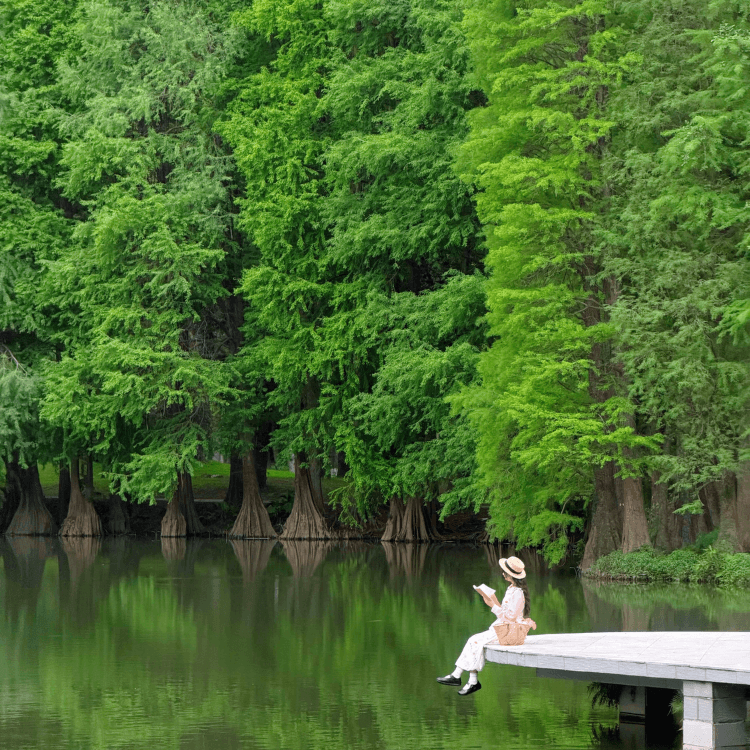
A friend of mine who runs a design studio once experienced this firsthand. Every project felt exhausting. Sleep became difficult, and she began questioning her career. When I asked her when she had last spent a full day outdoors without her phone or work plans, she could not remember. Her constant busyness, she later reflected, had left little space for Wood energy.
I experienced something similar during graduate school. Failed experiments, academic setbacks, anxiety, and insomnia left me exhausted and discouraged. Knowing that Wood is traditionally associated with nature, I often walked through the wooded areas of campus. Surrounded by trees and greenery, I gradually felt a sense of calm return.
Over time, I also noticed something interesting: many people I know who embody strong Wood qualities tend to be kind-hearted, generous, and willing to help others.
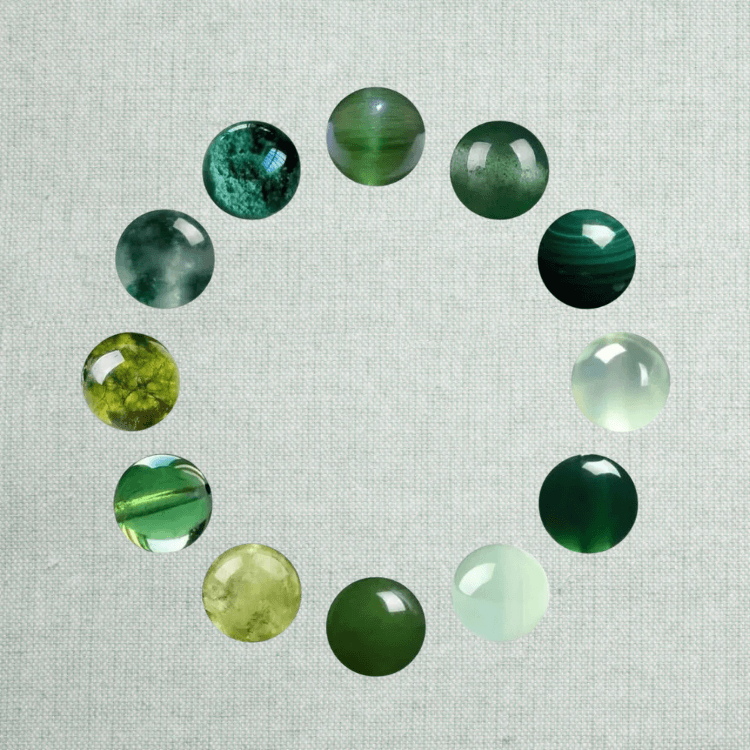
At RUYI Jewelry, Wood energy is expressed through a range of natural, untreated green-toned gemstones. Green Hetian Jade is one of our signature choices, traditionally believed to symbolize steady, enduring growth.
For more on the Wood element, see the Wikipedia entry for Wood (wuxing). Concurrently, we invite you to explore its contemporary philosophical and psychological resonance in our newly published deep dive into the [Wood Element: Jia Wood vs. Yi Wood Meaning→].
Fire (Summer)
Fire represents expression, joy, warmth, and vitality. When balanced, Fire brings enthusiasm and emotional warmth. When it becomes excessive, however, it can lead to burnout and exhaustion. In cases of deficiency, people may become withdrawn, uninspired, or reluctant to express themselves.
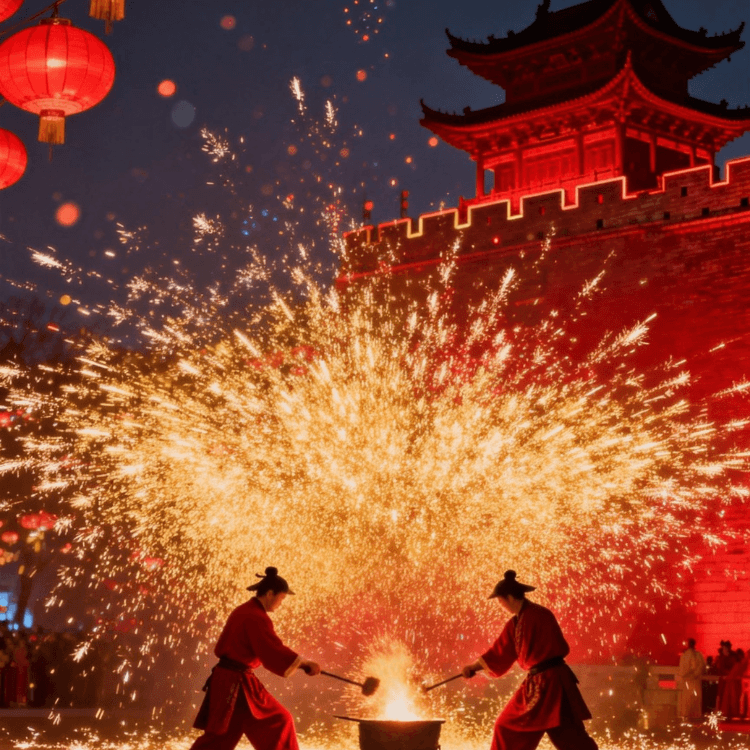
One of my relatives strongly embodies Fire energy. He is incredibly charismatic, humorous, and genuinely warm-hearted. Because Fire traditionally controls Metal in the Five Elements theory — and because fire also refines metal — our relationship has always been interesting. He often expects a great deal from me, and his criticism is usually well-intentioned, meant to strengthen rather than discourage. At times it feels demanding; yet when I am away from that influence for too long, I often become too comfortable and lose momentum.
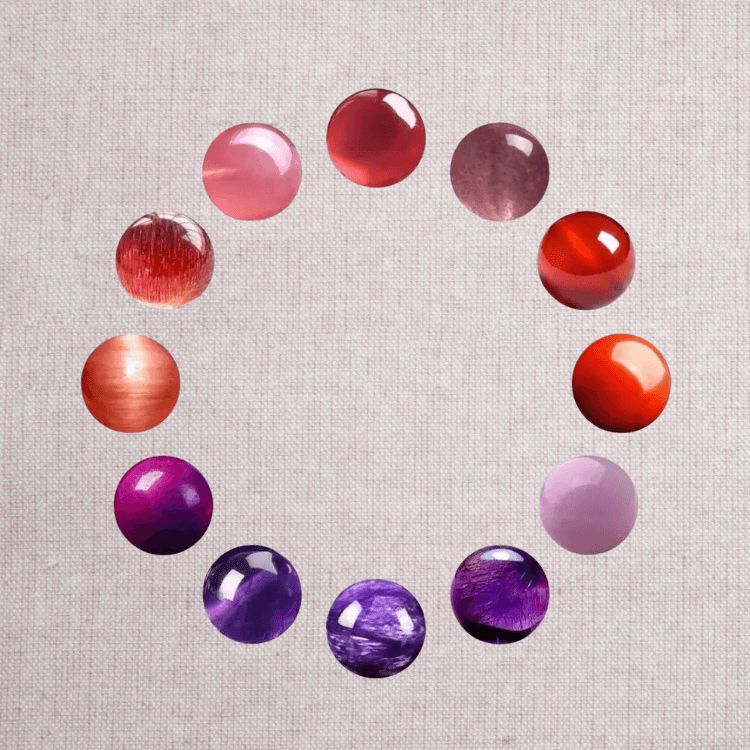
At RUYI Jewelry, Fire energy is expressed through a range of natural, untreated gemstones. South Red Agate, traditionally associated with Fire’s outward vitality, is one example, while Amethyst, despite its cooler color, is often connected with a more introspective expression of the same energy.
For more on the Fire element, see the Wikipedia entry for Fire (wuxing). Concurrently, we invite you to explore its contemporary philosophical and psychological resonance in our newly published deep dive into the [Fire Element : Bing Fire vs. Ding Fire Meaning→].
Earth (Late Summer)
Earth is perhaps the most overlooked element. It does not draw attention to itself, yet it supports everything else. In Traditional Chinese Medicine, Earth corresponds to the digestive system — and digestion here means much more than just food. It also refers to processing complex life experiences, emotional burdens, and relationships.

When Earth becomes imbalanced, excessive worry is often the result. People may overthink, struggle to say no, or assume responsibility for everyone else’s problems.
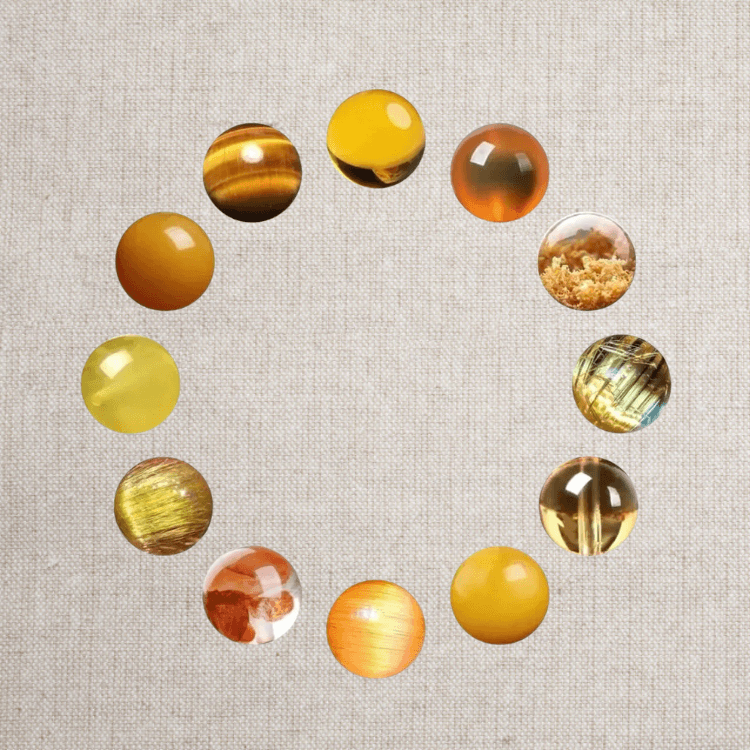
At RUYI Jewelry, Earth energy is expressed through a range of natural, untreated yellow and earth-toned gemstones. Citrine is one of our signature choices, often associated with warmth, groundedness, and a sense of stability during uncertain times.
For more on the Earth element, see the Wikipedia entry for Earth (wuxing). Concurrently, we invite you to explore its contemporary philosophical and psychological resonance in our newly published deep dive into the [Earth Element : Wu Earth vs. Ji Earth Meaning→].
Metal (Autumn)
Autumn has long been associated with letting go. Trees release their leaves without clinging to them. Metal represents boundaries, order, discernment, and clarity. People with strong Metal energy can prioritize effectively and know what to keep or release. When Metal is weak, on the other hand, thoughts become cluttered and personal boundaries may erode.
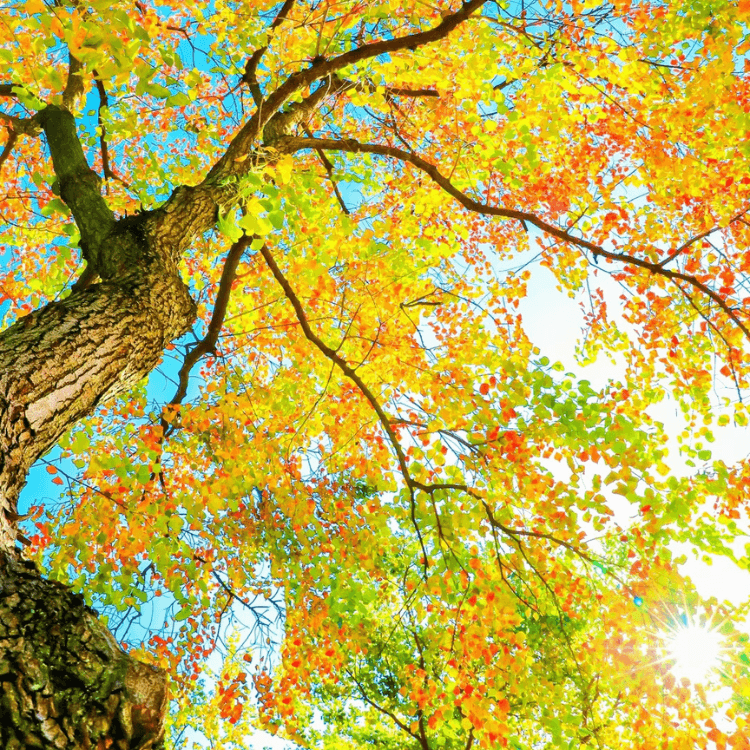
One simple practice that many find helpful is to write down everything occupying your mind, then cross out the responsibilities that do not truly belong to you. This process of refinement and elimination is one way to connect with Metal energy.

At RUYI Jewelry, Metal energy is expressed through a range of natural, untreated white and grey-toned gemstones. White Hetian Jade is one example, traditionally associated with mental clarity and healthy boundaries, and Clear Quartz is sometimes paired with it to complement its qualities.
For more on the Metal element, see the Wikipedia entry for Metal (wuxing). Concurrently, we invite you to explore its contemporary philosophical and psychological resonance in our newly published deep dive into the [Metal Element : Geng Metal vs. Xin Metal Meaning→].
Water (Winter)
Winter is not a season of failure — it is a sacred season of restoration. Traditional Chinese Medicine associates Water with the kidneys, willpower, and the emotion of fear. When Water is abundant, people often feel able to rest deeply and act decisively when needed. When Water is depleted, anxiety, hesitation, and uncertainty may arise more frequently.

A friend of mine once went through a difficult career transition. Throughout one winter, she entirely stopped forcing solutions. Instead, she focused on sleeping well, walking beside the river, and wearing a simple blue-toned jade pendant. The gemstone did not solve her problems directly. What it offered was a daily reminder to accept her current circumstances and allow herself to pause.
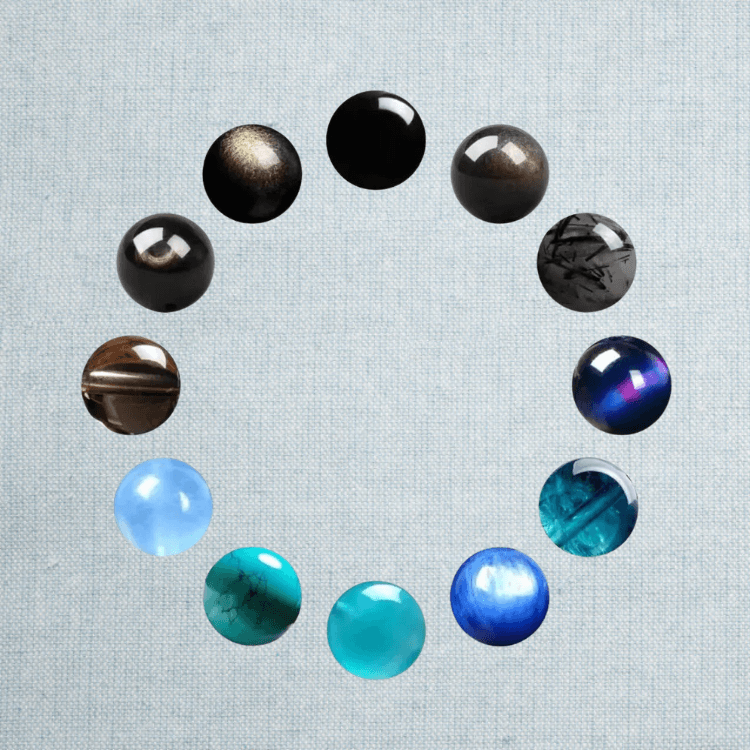
At RUYI Jewelry, Water energy is expressed through a range of natural, untreated blue-toned gemstones. Aquamarine and Blue Toned Jadeite are two of our current choices, traditionally associated with inner calm, clarity, and the quiet depth of Water energy.
For more on the Water element, see the Wikipedia entry for Water (wuxing). Concurrently, we invite you to explore its contemporary philosophical and psychological resonance in our newly published deep dive into the [Water Element : Ren Water vs. Gui Water Meaning→].
Exploring the Five Elements
Wood — The Energy of Growth Best for: visionaries, or anyone feeling stuck and frustrated. Season: Spring | Color: Green | Gemstones: Green Hetian Jade, Green Jadeite Balanced: inspired, patient, forward-looking | Imbalanced: stagnant, frustrated, overly competitive
Wood represents emergence and expansion. Many people wear green jade as a reminder to continue growing with clarity and purpose.

[Explore the Wood Collection →]
Fire — The Energy of Passion Best for: those feeling tired, disconnected, or lacking joy. Season: Summer | Color: Red | Gemstones: South Red Agate, Amethyst, Pink Tourmaline Balanced: joyful, confident, expressive | Imbalanced: irritable, emotionally depleted, restless
Fire symbolizes warmth, illumination, and transformation.

Explore the [Fire Collection] and [New Arrivals] →
Earth — The Energy of Stability Best for: anyone feeling anxious or ungrounded. Season: Late Summer | Color: Yellow | Gemstones: Citrine, Yellow Jasper Balanced: secure, empathetic, emotionally resilient | Imbalanced: worried, scattered, overthinking
Earth represents nourishment and centeredness.
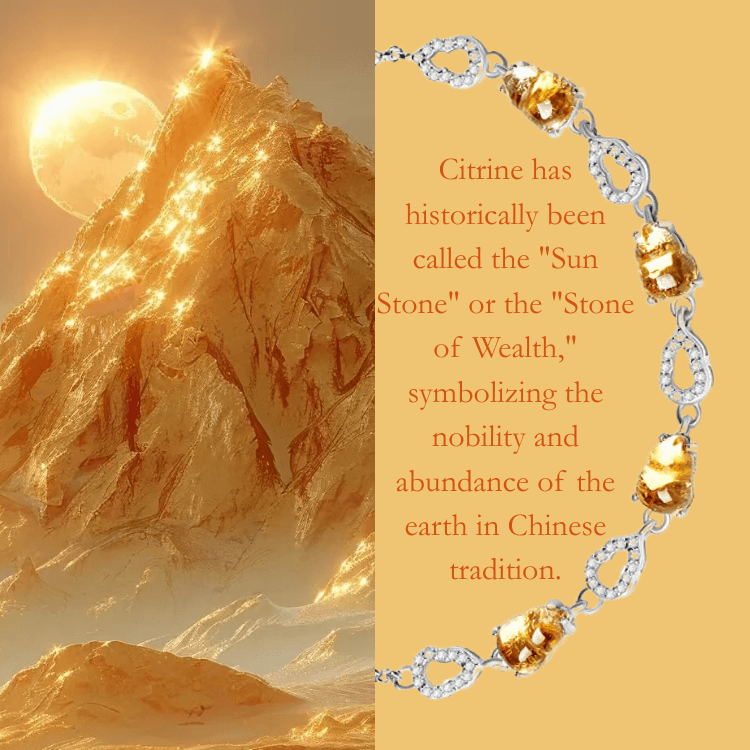
[Explore the Earth Collection →]
Metal — The Energy of Clarity Best for: those struggling with boundaries or mental clutter. Season: Autumn | Color: White | Gemstones: White Hetian Jade, Clear Quartz Balanced: focused, organized, discerning | Imbalanced: rigid, critical, prone to sadness
Metal symbolizes refinement and clarity.

[Explore the Metal Collection →]
Water — The Energy of Flow Best for: those experiencing fear, uncertainty, or lack of direction. Season: Winter | Color: Deep Blue/Black | Gemstones: Aquamarine, Blue Toned Jadeite Balanced: calm, resilient, adaptable | Imbalanced: anxious, rigid, directionless
Water symbolizes wisdom, depth, and adaptability.

[Explore the Water Collection →]
How to Apply the Five Elements in Daily Life
You do not need to memorize every detail of the Five Elements. Instead, start small with practical adjustments.
- When Wood feels weak: spend time outdoors in spring, try morning stretching, or begin a new project without pressure.
- When Fire feels weak: get sunlight, wear red or warm colors, or spend time with energetic friends.
- When Earth feels weak: eat regular meals, practice yoga, or walk barefoot on natural ground.
- When Metal feels weak: declutter your space, make lists, or practice deep breathing.
- When Water feels weak: go to bed earlier, listen to calming music, or take warm baths.
Wearing a Five Elements Bracelet
Many people find that physical reminders help them stay connected to their intentions. A traditional Five Elements bracelet may include stones such as:
- Green Hetian Jade (Wood)
- South Red Agate (Fire)
- Citrine (Earth)
- White Hetian Jade (Metal)
- Aquamarine or Blue Toned Jadeite (Water)
The purpose is not that the stones themselves “do” anything. Rather, they serve as a gentle sensory reminder to pause and ask: what do I need right now? Growth? Rest? Clarity? Connection?
The RUYI Five Elements Bracelet is crafted from certified natural gemstones, free from synthetic treatments and artificial dyes.
[Shop the Five Elements Bracelet →]
How Do I Know Which Element I Need?
Avoid labeling yourself permanently. Instead, ask two simple questions.
1. What season were you born in? (Northern Hemisphere)
| Birth Season | Reference Element |
|---|---|
| Spring | Wood |
| Summer | Fire |
| Late Summer | Earth |
| Autumn | Metal |
| Winter | Water |
2. What are you missing right now?
| If you feel… | Consider exploring this element |
|---|---|
| Stuck, unmotivated | Wood |
| Joyless, exhausted | Fire |
| Anxious, ungrounded | Earth |
| Scattered, lacking boundaries | Metal |
| Fearful, uncertain | Water |
Most people have both a birth element and a current need. The goal here isn’t identity — the goal is balance, like adjusting the temperature in a room.
[Free Five Elements Assessment — coming soon →]
Why Choose RUYI Jewelry?
We believe luxury should be meaningful. Authenticity. Craftsmanship. Intentional design. These three principles guide every piece in the Five Elements Collection.
Authenticity – All gemstones are natural, certified, and untreated. No glass, resin, or imitation.
Craftsmanship – Each gemstone is carefully selected, cut, and set by experienced artisans. [Learn more about our craftsmanship →]
Intentional Design – Colors, shapes, and metal pairings honor traditional symbolism while embracing contemporary minimalist aesthetics.
Frequently Asked Questions
What are the Five Elements in simple terms? Wood (Growth), Fire (Passion), Earth (Stability), Metal (Clarity), and Water (Flow). They are five patterns of energy rather than physical substances.
What does a Five Elements bracelet do? It can serve as a daily reminder to maintain balance and reconnect with your intentions.
Is this a religion? No — the Five Elements are a philosophical framework and system of observation, not a religion.
Do gemstones really work? Modern science has not verified the energetic properties of gemstones. Many people nonetheless find that meaningful objects can function as powerful personal rituals, which is one reason symbolic jewelry is valued.
How should I clean a Five Elements bracelet? Use a soft cloth and mild soap. Avoid ultrasonic cleaners for softer stones such as jade.
[See Complete Care Guide — coming soon →]
Conclusion: The Five Elements Are a Mirror
Ultimately, the value of the Five Elements is not in telling you who you are — it is in helping you recognize change.
Sometimes you are full of Wood energy, eager to begin and grow. Sometimes life calls for Water: rest, patience, and quiet reflection. At other times, you may need the clarity of Metal, the warmth of Fire, or the stability of Earth.
Wisdom lies not in adopting a permanent label, but in recognizing the season you are currently in — and responding accordingly. That is the meaning of the Five Elements in the modern world.
Discover your element today.
[Shop the RUYI Five Elements Collection →]
Not sure where to begin? [Take Our Free Assessment — coming soon →]
© All images are copyrighted by RUYI Jewelry. Unauthorized use or reproduction is strictly prohibited.
This article was written by Hao, founder of RUYI Jewelry. The character in my name carries the Water radical — the same balancing choice my family made when I was born with excess Fire energy, as shared at the beginning of this piece. That early, half-understood decision eventually grew into a lasting curiosity about the Five Elements, and later, into RUYI Jewelry itself. For personalized guidance, consider taking our assessment or consulting a qualified Traditional Chinese Medicine practitioner.
Further Reading
- Wang Yizhi 王逸之. “Disenchantment and Re-enchantment: A Dual Deconstruction of the Yin-Yang and Five Elements Theory” [祛魅与返魅:阴阳五行学说的双重解构]. History Teaching [历史教学], Second Half-Month Edition, no. 12 (2025).
- Wu Fei 吴飞. “The Philosophy of Time and Space in the Doctrine of Wu Xing” [五行学说中的时空哲学]. Philosophy China [哲学中国网], July 2024.
- Zhang Yong 张勇. “A Study of Yin-Yang and Five Elements Thought in the Laozi” [《老子》阴阳五行思想研究]. PhD dissertation, Central China Normal University [华中师范大学], 2017.