Most people’s understanding of the Water Element in the Five Elements only stays on superficial imagery such as gentle streams, morning dews and raging floods. Yet in classical Chinese Five Elements philosophy, the profound meaning embodied by Water extends far beyond tangible liquid. Instead, it embodies the midwinter depth of life itself: the season of absolute stillness, profound wisdom, and the infinite potential that quietly gathers before rebirth. Under closer inspection, it represents the innate drive to cultivate deep intuition, the unyielding courage to navigate vulnerability, and the quiet confidence of absolute flow.
We all experience moments like this: our minds grow stagnant and creativity dries up. As the years pass, accumulated life experience and mounting pressures close our hearts off little by little. Faced with unforeseen life transitions, we easily feel timid and hesitate to move forward. Within the traditional Five Elements framework, scholars often describe this state as a depletion or misalignment of Water energy in the body and soul. In light of this, understanding Water means learning how to embrace absolute adaptability without losing your core identity, and how to discover deep clarity in moments of stillness rather than constantly forcing movement.
Ren Water and Gui Water: Two Faces of the Same Element
Classical Chinese fate philosophy divides the Water element into two distinct temperaments through the Heavenly Stems system—one wild and monumental, one intimate and pervasive. Together, they offer two complete, equally valid models of emotional and intellectual fluid resilience.
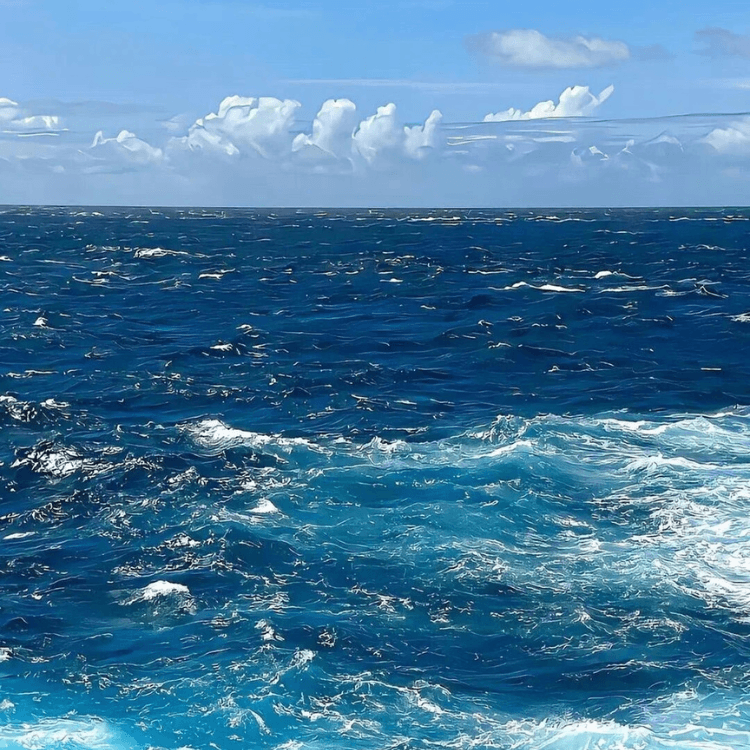
Ren Water — The Majesty of the Vast Ocean
Ren Water represents the purely Yang, vigorous expression of the Water element. The classical text San Ming Tong Hui (三命通會) records:
“壬水喜陽土而為堤岸之助,畏陰木而為盜氣之憂。在天為雲,在地為澤,謂之陽水。”
“Ren Water welcomes Yang Earth to act as a supportive riverbank, and fears Yin Wood which drains its vitality; in heaven it is the vast cloud, on earth it is the great lake and ocean—this is called Yang Water.” — San Ming Tong Hui, Volume 2
On the other hand, the text introduces a profound natural law regarding this element: its inherent connection to immense, moving power. As the ocean or a surging river, Ren Water carries the capacity to reshape landscapes and bridge distant worlds. Traditionally, this description suggests that Ren Water requires strong structures and clear boundaries (represented by Yang Earth) to channel its vast momentum into purposeful creation. As a result, its true power relies on its capacity to stay deep, move with intention, and embrace grand transitions without overflowing. Therefore, it remains a strength that thrives on immense courage, panoramic vision, and an unyielding trust in the grand currents of life.
Gui Water — The Alchemy of the Sacred Spring
Gui Water is Water’s Yin expression. The classical text San Ming Tong Hui (三命通會) records:
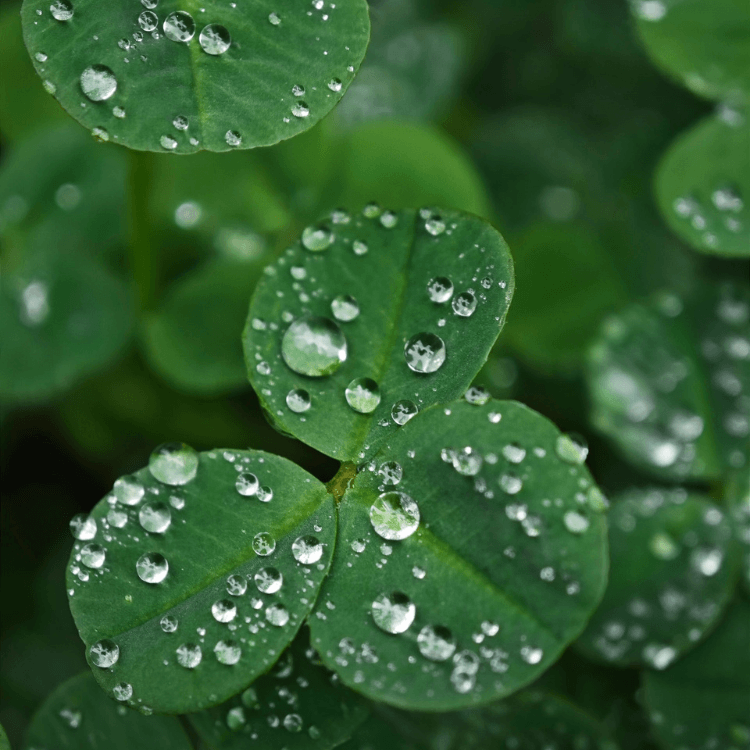
“Gui Water follows after Ren, representing the completion of the cosmic cycle and the gentle turning point back to the beginning; in heaven it is rain and dew, on earth it is spring water and hidden veins—this is called Yin Water… its substance is ultimate stillness and supreme softness… it moistens and nurtures the myriad things with profound, quiet merit.” — San Ming Tong Hui, Volume 2
In contrast to Ren Water’s thunderous momentum, Gui Water represents the power of quiet infiltration, emotional intelligence, and pervasive awareness. As the text notes, its substance belongs to ultimate stillness and supreme softness (至靜更柔). It does not demand grand scale or loud recognition; instead, it operates softly, quietly nourishing the deepest roots of creativity and civilization. Furthermore, ancient scholars observed that Gui Water possesses an extraordinary capacity to adapt to any vessel, allowing it to navigate the most complex social or emotional terrain with effortless grace. Ultimately, what it needs isn’t forceful direction—it requires pristine purity, continuous subtle movement, and the freedom to express its intuitive wisdom without suppression.
In popular usage, people often simplify these two images to “Ren Water as the roaring ocean, Gui Water as the droplet of rain.” Although that version is widely known, the original San Ming Tong Hui characterization remains far more precise: Ren Water’s defining feature involves relying on structural banks to manifest its cosmic utility, whereas Gui Water’s defining feature centers on supreme adaptability, quiet nourishment, and the intrinsic purity that allows it to moisten the world without a sound.
From the Ditian Sui: The Law of Adaptation
The Ditian Sui (滴天髓), compiled in 1848 during the Daoguang era of the Qing dynasty, explores the cosmic behavior of Water with absolute poetic mastery. Its canonical passage on Ren and Gui Water reads:
“壬水通河,能洩金氣,剛中之德……周流不滯。癸水至弱,達於南極……得龍以雲,功化斯神。”
“Ren Water connects the cosmic rivers, holding the power to channel the intense energy of Metal, embodying a strength that is firm yet balanced… it flows everywhere without stagnation. Gui Water is seemingly the softest element, yet its reach extends to the furthest horizons… when it encounters its true alignment, its transformative power achieves a sacred, spiritual grace.” — Ditian Sui, On Ren & Gui Water
We read this as a profound reflection on emotional intelligence and mental clarity. For instance, when we encounter rigid structures or heavy emotional stress (represented by Metal), the “flowing and un-stagnant” Ren Water wisdom reminds us that we do not need to fight rigidity with rigidity. For this reason, we can use our fluid intelligence to smoothly absorb, process, and channel that energy into creative expression.
Meanwhile, when we examine our quietest vulnerabilities, the “seemingly soft but infinitely pervasive” Gui Water teaches us that softness is not weakness. It reminds us that our gentlest intuitive whispers possess the power to dissolve the hardest barriers over time. Instead of forcing outcomes, we must let our awareness “flow everywhere without stagnation” (周流不滯) to maintain our inner peace. Consequently, stability comes from knowing when to move like a great river to clear your path, and when to sit like a mountain spring to let your wisdom settle.
Water and the Deep Core: A Traditional Association
Traditional Chinese philosophical theory also maps the Five Elements onto our internal landscape, connecting Water directly to our deepest reserves of vitality. Within this ancient framework, Water governs the kidneys, regulating our foundational energy, marrow, and the ancestral strength that sustains us through winters of the soul.
Importantly, this is a description from traditional philosophy, not a modern clinical diagnosis. When a person holds a balanced Water energy, traditions link it to deep wisdom, philosophical clarity, and an unshakable absence of fear. Alternatively, when this energy becomes blocked, stagnant, or deficient, historical texts sometimes associate the imbalance with chronic anxiety, creative paralysis, or a defensive hoarding of emotions.
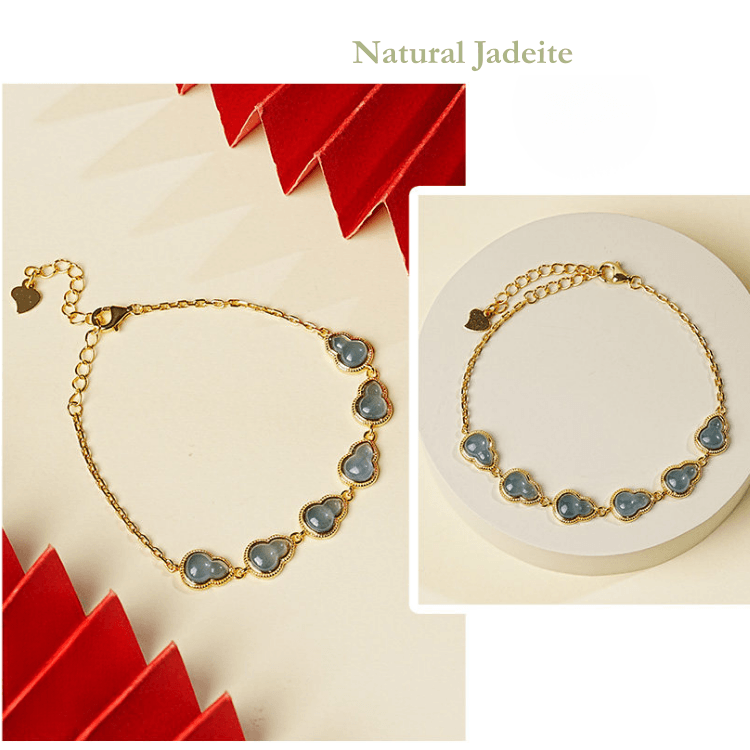
The Blue Toned Jadeite Talisman Hulu Bracelet: A Daily Reminder
Traditional culture has long paired natural materials with auspicious symbols as everyday reminders. RUYI Jewelry continues that practice through a contemporary, minimalist design language.
To faithfully articulate the cultural integrity of the Water element, we selected natural, untreated Blue Toned Jadeite. Distant from the artificial, superficial shine of synthetic materials, this deep stone possesses a velvety, bottomless inner depth—a rich, absolute black reminiscent of deep ocean waters quietly holding the stars of the night sky. It remains entirely restrained, elegant, and composed.
At the center of the bracelet sits a minimalist Hulu (gourd) motif, hand-carved in 925 silver—a nod to authentic Chinese Aesthetic Jewelry. In Eastern tradition, people regard the gourd as a symbol that gathers, filters, and neutralizes unaligned energies. Furthermore, artisans traditionally associate wearing this dark stone with deep emotional flow and intuitive protection. Thus, it functions as a quiet, daily companion: a physical anchor reminding the wearer that they possess an ocean of wisdom within, even when external storms attempt to disturb their peace.
Why RUYI Jewelry
We believe luxury should be meaningful. Authenticity. Craftsmanship. Intentional design. These three principles guide every piece in the Five Elements Collection.
Authenticity – All gemstones are natural. No glass, resin, or imitation.
Craftsmanship – Each gemstone is carefully selected, cut, and set by experienced artisans.
Intentional Design – Colors, shapes, and metal pairings honor traditional symbolism while embracing contemporary minimalist aesthetics.
Frequently Asked Questions
What is the Water element’s primary difference between Ren and Gui? Neither is better or worse—they represent two different states and needs. Traditionally, most people carry both qualities; which one is more relevant simply shifts depending on whether you need to embrace grand, visible transitions like Ren Water, or cultivate quiet, intuitive depth like Gui Water.
Why does classical philosophy associate Water with winter and stillness? This connection represents a core tenet of classical philosophy. Winter is the season where nature withdraws its energy into the deep earth to rest and conserve its essence. Consequently, Water represents the vital wisdom that allows you to pause, restore your spirit, and prepare your potential for the coming spring.
How do I care for the Blue Toned Jadeite? Use a soft cloth with a mild cleanser. Avoid ultrasonic cleaners, and keep the stone away from prolonged exposure to harsh household chemicals or abrasive surfaces.
Are the “modern interpretations” in this article part of the original classical texts? No. Anywhere this article extends a classical passage into a modern, everyday perspective, we’ve marked it clearly as RUYI’s own reading—offered for reflection, not presented as what the original text itself was discussing.
Water Doesn’t Need to Apologize for Its Softness
Whether you feel closer to the immense Ren ocean navigating grand life transitions, or the subtle Gui spring quietly nourishing your creative ideas, Water offers the same reminder either way: clarity requires flow. You do not need to freeze in fear when facing the unknown, and a season of deep, quiet stillness is not a sign of stagnation—it is the very process that allows your life’s essence to replenish, gather strength, and eventually break through into a beautiful new beginning.
Discover your element today.
[Shop the Blue Toned Jadeite Talisman Hulu Bracelet →]
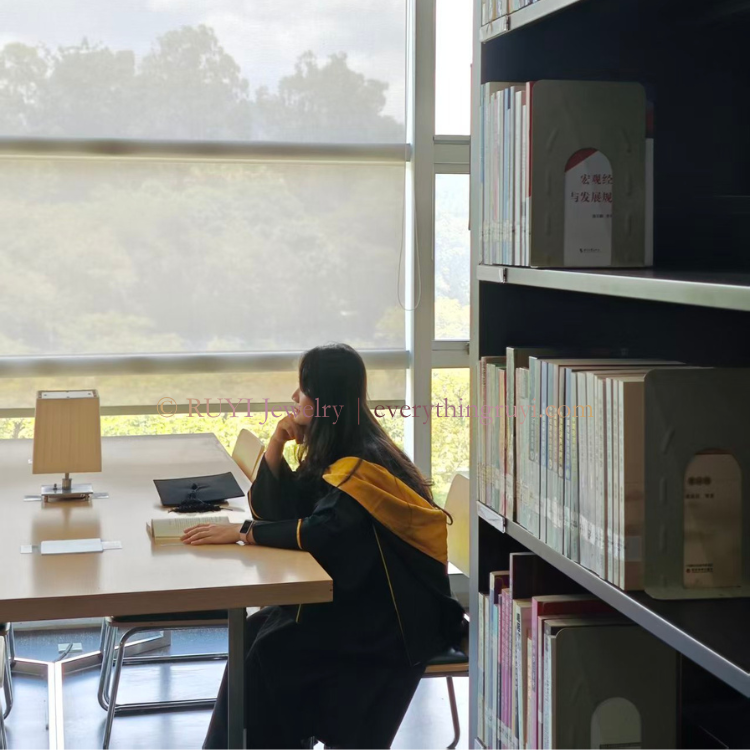
Written by Hao, founder of RUYI Jewelry. Hao holds a master’s degree in biology and approaches Chinese philosophy with both cultural curiosity and scientific grounding.