People tend to oversimplify the meaning of the Earth element of the Five Elements, reducing it to plain, tangible substances—dirt, mud, or simple clay underfoot. Yet, in the profound architecture of classical Chinese philosophy, Wood, Fire, Metal, and Water always rely on a deeper foundation. Earth was never mere soil. Instead, it embodies the primordial axis of balance itself: the central reservoir of stability that holds, anchors, and nurtures all life. Under closer inspection, it represents the innate drive to remain centered amidst chaos, the unyielding capacity to support others, and the quiet confidence of internal groundedness.
Lots of people leave home to chase success and build their careers, yet they frequently suffer from constant mental inner conflict—feeling chronically ungrounded, hyper-anxious about the future, or constantly scattered by the accelerating pace of daily life. Within the traditional Five Elements framework, scholars often describe this state as a depletion or misalignment of Earth energy in the body and mind. In light of this, understanding Earth means learning how to cultivate an unshakable inner center while the world shifts around us, and how to build a foundation of deep, enduring trust in our own resilience.
Wu Earth and Ji Earth: Two Faces of the Same Element
Classical Chinese fate philosophy divides the Earth element into two distinct temperaments through the Heavenly Stems system—one majestic and unyielding, one nurturing and connective. Together, they offer two complete, equally valid models of stability.
Wu Earth — The Majesty of the Solid Mountain
Wu Earth represents the purely Yang, vigorous expression of the Earth element. The classical text San Ming Tong Hui (三命通會) records:
“戊土洪蒙未判,抱一守中,天地既分,厚载万物,聚於中央,散於四维。在天為霧,在地為山,謂之陽土。”
“Wu Earth emerged before the cosmos fully separated, embracing oneness and guarding the center; once heaven and earth divided, it thickly sustained the myriad things, gathering at the center and radiating toward the four dimensions. In heaven it is mist, on earth it is the mountain—this is called Yang Earth.” — San Ming Tong Hui, Volume 2
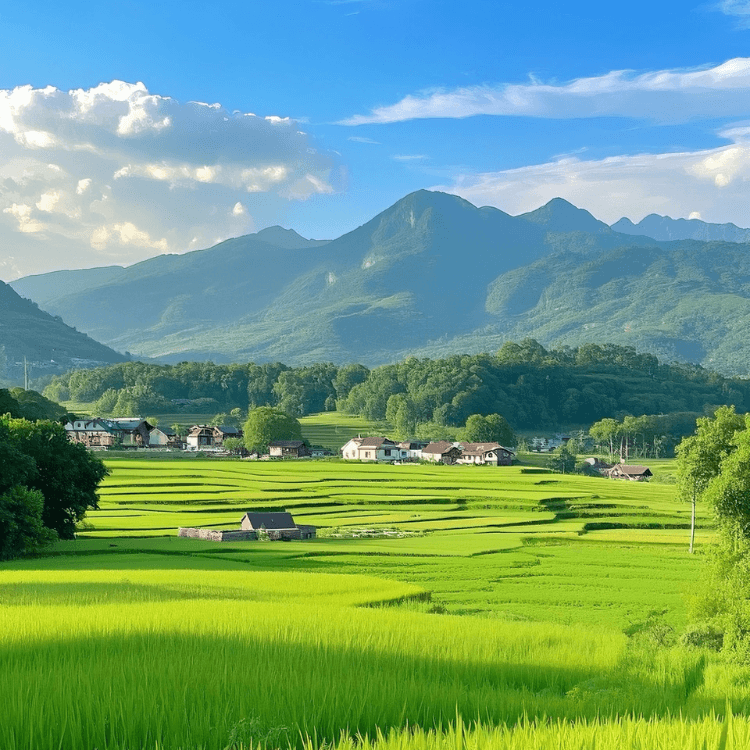
On the other hand, the text highlights a defining quality of this element: its immense, unmovable density. As the mountain, Wu Earth stands as a colossal guardian of boundaries. Traditionally, this description suggests that Wu Earth does not shift its stance for temporary storms; rather, it provides an absolute sanctuary of safety. As a result, its true power relies on its capacity to absorb immense pressure and contain vast internal resources without cracking. Therefore, it remains a strength that thrives on silent endurance, monumental presence, and an inherent refusal to be swayed by external chaos.
Ji Earth — The Nurturing Alchemy of the True Soil
Ji Earth is Earth’s Yin expression. San Ming Tong Hui describes it this way:
“Ji Earth follows after Wu, acting as the primordial qi of heaven and the true soil of earth. Its clear energy rises to harmonize heaven and earth, while its dense energy descends to gather and generate the myriad things; this is called Yin Earth. None of the three realms—heaven, earth, or humanity—can lack this earth, for it acts as the vital matchmaker between Yin and Yang…” — San Ming Tong Hui, Volume 2
In contrast to the solitary mountain, Ji Earth represents the connective tissue of the universe. It functions as a “matchmaker” (媒妁), an alchemical bridge that harmonizes conflicting energies and transforms raw potential into living growth. Furthermore, ancient scholars noted that Ji Earth remains present across all four seasons, quietly facilitating every major transition in life. Ultimately, what it needs isn’t isolation—it requires active connection, continuous circulation of energy, and the gentle warmth of purposeful creation to keep its soil rich and fertile.
In popular usage, people often simplify these two images to “Wu Earth as the towering mountain, Ji Earth as the garden soil.” Although that version is more widely known, the original San Ming Tong Hui characterization remains far more precise: Wu Earth’s defining feature involves central containment and thick support, whereas Ji Earth’s defining feature centers on universal matchmaking, integration, and alchemical transformation.
From the Ditian Sui: The Art of Centering
The Ditian Sui (滴天髓), compiled in 1848 during the Daoguang era of the Qing dynasty, explores the cosmic dynamics of Earth with profound precision. Its passage on Yang and Yin Earth reads:
“戊土固重,既中且正……若在艮坤,怕冲宜静。己土卑湿,中正蓄藏……不愁木盛,不畏水狂。”
“Wu Earth is solid and heavy, holding both balance and correctness… if resting upon its own deep foundations, it fears disruption and thrives in absolute stillness. Ji Earth is humble and moist, storing core balance within… it does not fear the dense growth of Wood, nor does it panic before the wild currents of Water.” — Ditian Sui, On Wu & Ji Earth
We read this as a profound reflection on personal centering and emotional boundaries. For instance, when we face sudden crises or external noise, the “solid and heavy” Wu Earth wisdom reminds us that true power fears frantic reaction. For this reason, remaining in absolute stillness (宜静) allows us to absorb pressure without losing our stance.
Meanwhile, when life demands flexibility rather than rigid resistance, the “humble and moist” Ji Earth teaches us how to absorb the chaotic currents of life without washing away. Consequently, it doesn’t fear the aggressive growth of others or the overwhelming emotional storms of the world. In essence, this forms our own extension of the classic Ditian Sui principle, offering a timeless reminder that stability comes in two distinct forms: the absolute stillness that guards boundaries, and the soft resilience that accommodates change.
Earth and the Center: A Traditional Association
Traditional Chinese philosophical theory also maps the Five Elements onto our internal landscape, placing Earth at the very center of human vitality. Within this ancient framework, Earth governs our capacity to digest—not just the food we consume, but the thoughts, emotions, and experiences we encounter daily.
Importantly, this is a description from traditional philosophy, not a modern clinical diagnosis. When a person holds a balanced Earth energy, traditions link it to empathy, intellectual clarity, and an innate sense of belonging. Alternatively, when this energy becomes blocked or deficient, historical texts sometimes associate the imbalance with excessive overthinking, chronic worry, or a feeling of being stuck in mental loops.
The Citrine Talisman Hulu Bracelet: A Daily Reminder
Traditional culture has long paired natural materials with auspicious symbols as everyday reminders. RUYI Jewelry continues that practice through a contemporary, minimalist design language.
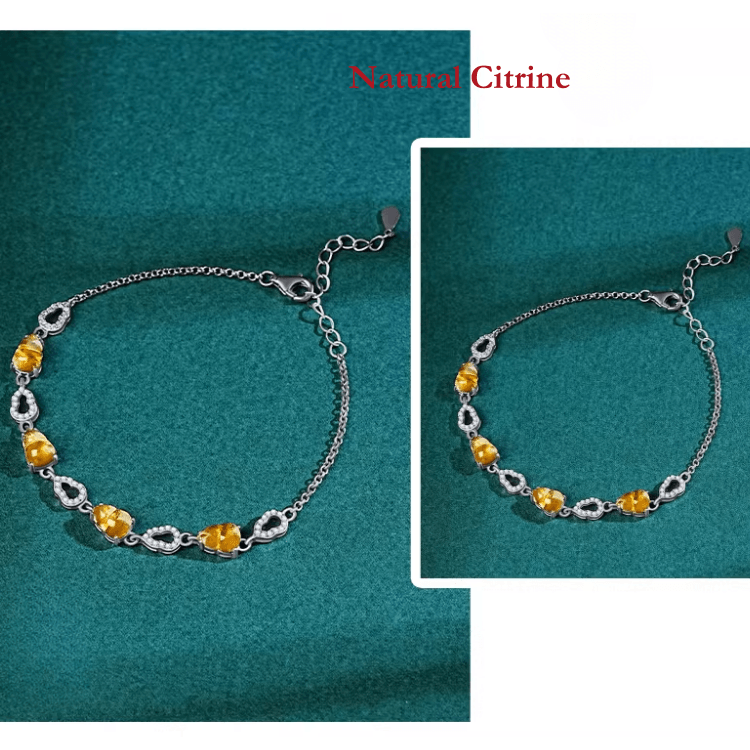
To faithfully articulate the cultural integrity of the Earth element, we selected natural, untreated Citrine. Distant from the aggressive, artificial sparkle of modern treated crystals, this rare stone possesses a deep, buttery inner warmth—a serene, golden-yellow hue reminiscent of ancient earth quietly anchoring the roots of the world. It remains entirely restrained, elegant, and composed.
At the center of the bracelet sits a minimalist Hulu (gourd) motif, hand-carved in 925 silver—a nod to authentic Chinese Aesthetic Jewelry. In Eastern tradition, people regard the gourd as a symbol that gathers, filters, and neutralizes unaligned energies. Furthermore, artisans traditionally associate wearing this jade with steady, unshakable grounding. Thus, it functions as a quiet, daily companion: a physical anchor reminding the wearer that they possess an unmovable center, even when the world feels entirely volatile.
Why RUYI Jewelry
We believe luxury should be meaningful. Authenticity. Craftsmanship. Intentional design. These three principles guide every piece in the Five Elements Collection.
Authenticity – All gemstones are natural. No glass, resin, or imitation.
Craftsmanship – Each gemstone is carefully selected, cut, and set by experienced artisans.
Intentional Design – Colors, shapes, and metal pairings honor traditional symbolism while embracing contemporary minimalist aesthetics.
Frequently Asked Questions
What is the Earth element’s primary difference between Wu and Ji? Neither is better or worse—they represent two different states and needs. Traditionally, most people carry both qualities; which one is more relevant simply shifts depending on whether you need to stand firm like an unyielding mountain, or adapt and harmonize like fertile soil.
Why does classical philosophy place Earth at the center of the Five Elements? This positioning represents a core tenet of classical philosophy. While other elements dominate specific seasons, Earth serves as the neutral, stabilizing force that allows one season to smoothly transition into the next. Consequently, it represents the foundational peace that makes all transformation possible.
How do I care for Citrine? Use a soft cloth with a mild cleanser. Avoid ultrasonic cleaners, and keep the stone away from prolonged exposure to harsh household chemicals.
Are the “modern interpretations” in this article part of the original classical texts? No. Anywhere this article extends a classical passage into a modern, everyday perspective, we’ve marked it clearly as RUYI’s own reading—offered for reflection, not presented as what the original text itself was discussing.
Earth Doesn’t Need to Apologize for Its Stillness
Whether you feel closer to the silent mountain standing guard over its valleys, or the rich soil quietly weaving life together, Earth offers the same reminder either way: stability takes time to build. It doesn’t need to rush, and a season of absolute stillness isn’t a sign of stagnation—it is the very ground upon which your next expansion is preparing to rise.
Written by Hao, founder of RUYI Jewelry. Hao holds a master’s degree in biology and approaches Chinese philosophy with both cultural curiosity and scientific grounding.